- Home
- Company Profile
-
Our Products
- Basmati Rice for Global Buyers & Importers
- Non-Basmati Rice – Bulk Supply for Global Importers & B2B Buyers
- Pulses – Global Bulk Supply for B2B Buyers & Importers
- Jaggery Suppliers for Bulk B2B Buyers
- Honey for Global Buyers & Importers
- Sesame Seeds Suppliers for Bulk Buyers
- Sweet Corn for Bulk Buyers
- Makhana Suppliers for Bulk Buyers
- Frozen Peas for Global Buyers & Importers
- Blogs
- Contact Us

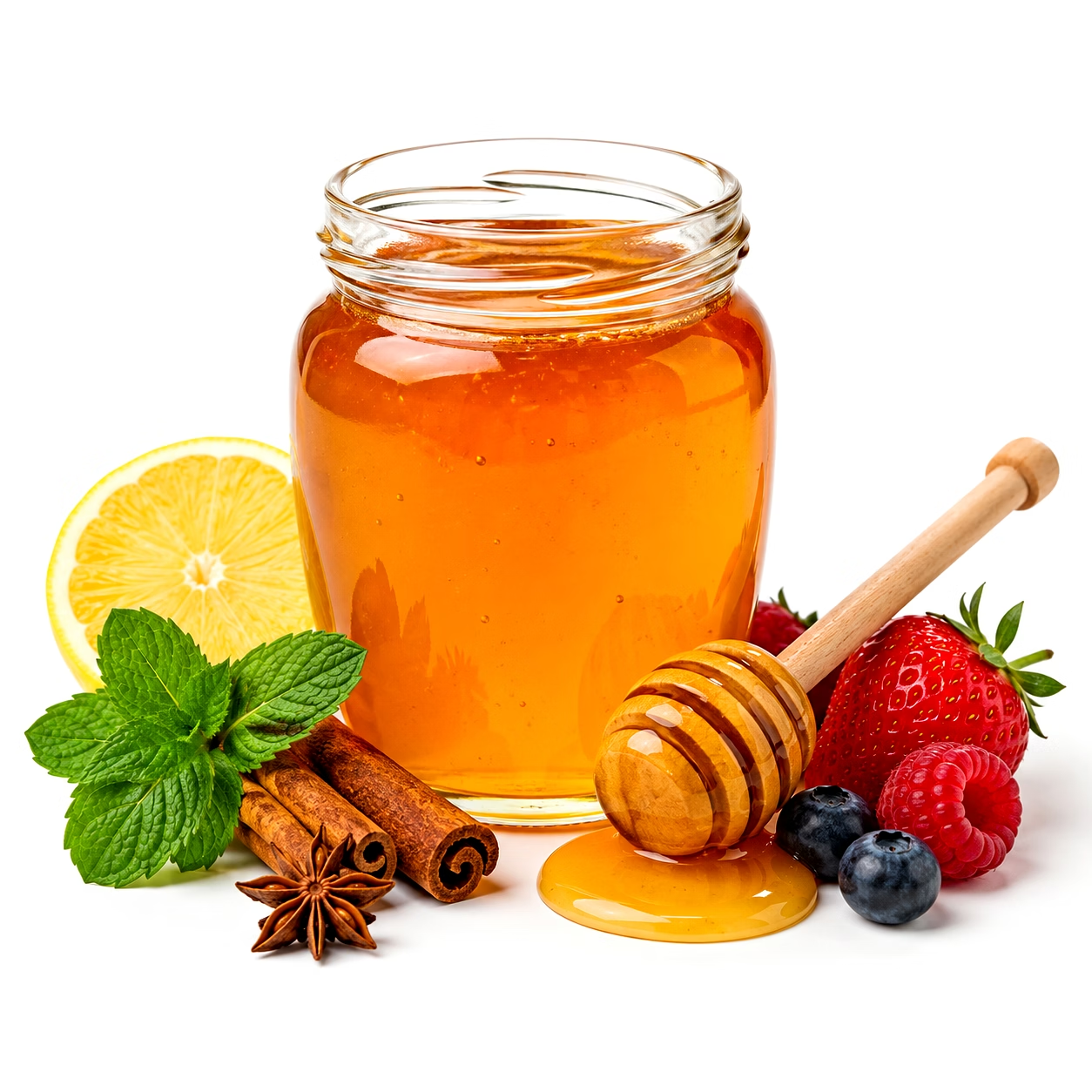

Flavoured Honey for Wholesale, Retail, Gifting, Foodservice and Import Buyer Sourcing
-
Product is not available
Country Of Origin : India
Flavoured Honey for Retail & Foodservice Packaging
Flavoured Honey is a food-grade honey blended with natural flavor infusions designed for retail jars, gifting packs and foodservice use. It serves private-label packers, gourmet retailers and foodservice operators needing stable viscosity, flavor stability and documented moisture / HMF parameters. The product mitigates fermentation risk through controlled moisture and validated filling temperatures.
Packaging is available in consumer jars, squeezable pouches and bulk unjars for industrial fillers. Lot-specific COA, HMF and moisture testing accompany shipments; private-label jar labeling and tamper-evident closures can be arranged.
Quality Parameters & Export Tolerances | Processing Grade
- Moisture: Max 20% (Export Standard)
- Brix: Typically >80 (indicative for standard honey bases)
- HMF: <40 mg/kg (Indicative for fresh harvest and controlled processing)
- Pollen/Profile: Floral-origin traceable on request (used for product differentiation)
Wholesale Packaging & Fulfillment
- MOQ & Load Sizing: 20ft/40ft FCL container loads or LCL consolidated shipments; sample jars available for evaluation
- Lead Time & Fulfillment: Filled and labeled lots dispatched with batch COA and filling-temperature logs
- Supply Authority: FSSAI and HACCP aligned filling operations with traceable batch records
- Packaging Formats: 250g–1kg glass jars, 250g squeezable pouches, and bulk food-grade drums for refill lines
Food Formulation & Processing Suitability
Buyers include gourmet retail brands, gift pack assemblers and foodservice kitchens requiring consistent texture and flavor retention. Flavoured honey requires low-temperature infusion and controlled blending to preserve volatile aroma compounds. For formulators, stability during shelf life is managed by limiting water activity and documenting HMF and moisture at filling.
Export & Supply Chain Controls | Filling Facility & Documentation
- Infrastructure & QA: Temperature-controlled blending lines, batch-wise HMF and moisture testing, and traceable filling logs
- Country of Origin: India
- Port of Loading: Major local ports (e.g., Mundra / Nhava Sheva)
- Documents Provided: Batch-wise COA, Commercial Invoice, Packing List and filling-temperature reports
Processing Insight & Flavor Stability
Flavor infusion requires gentle mixing below 40°C to retain volatile notes. Elevated heat accelerates HMF formation and can alter floral character; buyers evaluating shelf-life performance should request HMF and sensory logs. Crystallization behavior varies with glucose:fructose ratio; infusions with citrus or spice particulates increase nucleation sites and may accelerate settling—choose clear filtration or micro-dispersion steps for stable retail presentation.
Request a Procurement Quote | Private Label Filling & Sampling
Provide desired jar size, target flavor profile, expected annual volume and destination port to receive pricing, COA samples and filling schedule options.
Semantic Internal Linking & Categories
Related Commodities & Capabilities:
- Raw Honey Variants, Infused & Flavoured Ranges
- Private Label Retail Packaging, Custom Blending Services
Explore Category:
- Honey & Natural Sweeteners for Retail and Foodservice
Frequently Asked Questions
- What moisture and HMF limits are provided? Moisture is maintained at ≤20% and HMF is typically <40 mg/kg; both values are batch-verified and reported on the COA.
- Is flavored honey suitable for direct retail filling? Yes. Low-temperature infusion and filtration improve clarity and stability; request filling-temperature records for sensory validation.
- How is crystallization managed in flavored variants? Crystallization depends on glucose:fructose ratio and particulate load; options include fine filtration, controlled thermal conditioning and use of inversion blends to slow nucleation.
- What packaging and container options exist for gifting vs foodservice? Consumer glass jars (250g–1kg) with tamper-evident lids for gifting; bulk drums or unjars for foodservice and industrial refill lines.
